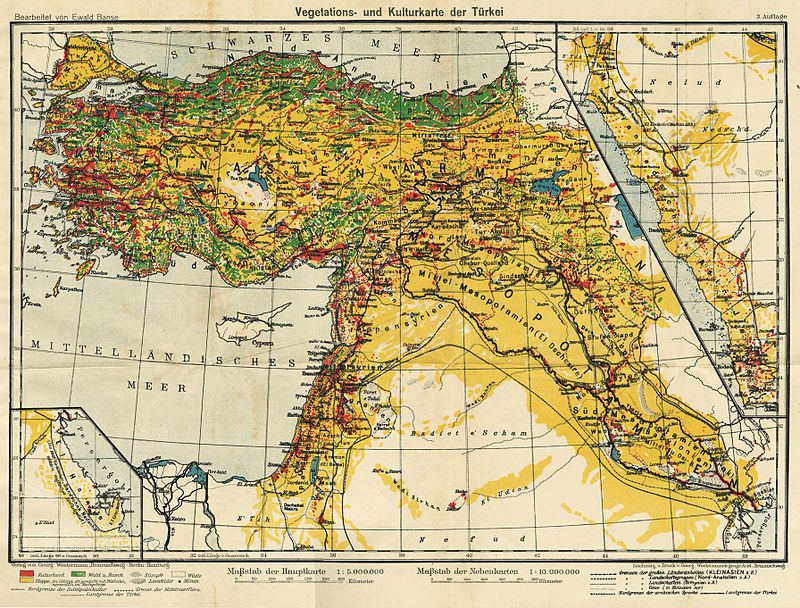
◊ Large parts of the Middle East became a war ground between the Ottomans and the Iranian Safavid dynasty for centuries, starting in the early 16th century. By 1700, the Ottomans had been driven out of the Kingdom of Hungary and the balance of power along the frontier had shifted decisively in favor of the Western world. The British Empire also established effective control of the Persian Gulf, and the French colonial empire extended its influence into Lebanon and Syria. In 1912, the Kingdom of Italy seized Libya and the Dodecanese islands, just off the coast of the Ottoman heartland of Anatolia. In the late 19th and early 20th centuries, Middle Eastern rulers tried to modernize their states to compete more effectively with the European powers. A turning point in the history of the Middle East came when oil was discovered, first in Persia in 1908 and later in Saudi Arabia (in 1938) and the other Persian Gulf states, and also in Libya and Algeria. A Western dependence on Middle Eastern oil and the decline of British influence led to a growing American interest in the region.