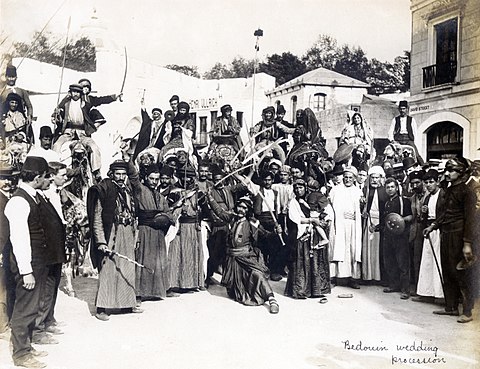
◊ The nomadic Bedouin tribes dominated the Arabian desert, where they worshiped idols and remained in small clans tied together by kinship. Urbanization and agriculture was limited in Arabia, save for a few regions near the coast. Mecca and Medina (then called Yathrib) were two such cities that were important hubs for trade between Africa and Eurasia. This commerce was central to city-life, where most inhabitants were merchants. Nevertheless, some Arabs saw it fit to migrate to the northern regions of the Fertile Crescent, a region so named for its place between the Tigris and Euphrates rivers that offered it fertile land. This included entire tribal chiefdoms such as the Lakhmids in a less controlled area of the Sasanian Empire, and the Ghassanids in a similar area inside of Byzantine territory; these political units of Arab origin offered a surprising stability that was rare in the region and offered Arabia further connections to the outside world. The Lakhmid capital, Hira was a center for Christianity and Jewish craftsmen, merchants, and farmers were common in western Arabia as were Christian monks in central Arabia. Thus pre-Islamic Arabia was no stranger to Abrahamic religions or monotheism, for that matter.