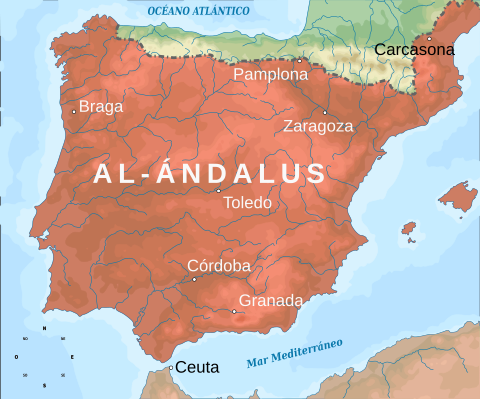
◊ Much of North Africa became a peripheral area to the main Muslim centres in the Middle East, but Iberia (Al-Andalus) and Morocco soon broke away from this distant control and founded one of the world’s most advanced societies at the time, along with Baghdad in the eastern Mediterranean. Between 831 and 1071, the Emirate of Sicily was one of the major centres of Islamic culture in the Mediterranean. After its conquest by the Normans the island developed its own distinct culture with the fusion of Arab, Western, and Byzantine influences. Palermo remained a leading artistic and commercial centre of the Mediterranean well into the Middle Ages.
Africa was reviving, however, as more organized and centralized states began to form in the later Middle Ages after the Renaissance of the 12th century. Motivated by religion and conquest, the kings of Europe launched a number of Crusades to try to roll back Muslim power and retake the Holy Land. The Crusades were unsuccessful but were far more effective in weakening the already tottering Byzantine Empire. They also rearranged the balance of power in the Muslim world as Egypt once again emerged as a major power.