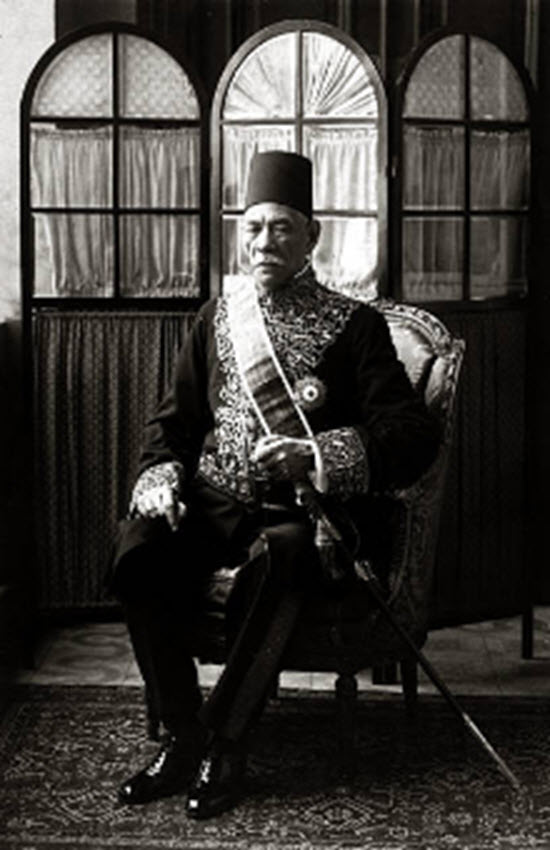
◊ During the 1920s, 1930s, and 1940s, Syria and Egypt made moves towards independence. In 1919, Egypt’s Saad Zaghloul orchestrated mass demonstrations in Egypt known as the First Revolution. While Zaghloul would later become Prime Minister, the British repression of the anticolonial riots led to around 800 deaths. In 1920, Syrian forces were defeated by the French in the Battle of Maysalun and Iraqi forces were defeated by the British when they revolted. In 1922, the (nominally) independent Kingdom of Egypt was created following the British government’s issuance of the Unilateral Declaration of Egyptian Independence.
Although the Kingdom of Egypt was technically “neutral” during World War II, Cairo soon became a major military base for the British and the country was occupied. The British cited the 1936 treaty that allowed it to station troops on Egyptian soil to protect the Suez Canal. In 1941, the Rashīd `Alī al-Gaylānī coup in Iraq led to the British to invade, leading to the Anglo-Iraqi War. This was followed by the Allied invasion of Syria–Lebanon and the Anglo-Soviet invasion of Iran.
In Palestine, conflicting forces of Arab nationalism and Zionism created a situation the British could neither resolve nor extricate themselves from. The rise of German dictator Adolf Hitler had created a new urgency in the Zionist quest to immigrate to Palestine and create a Jewish state. A Palestinian state was also an attractive alternative to the Arab and Persian leaders, instead of the de facto British, French, and perceived Jewish colonialism or imperialism, under the logic of “the enemy of my enemy is my friend”.