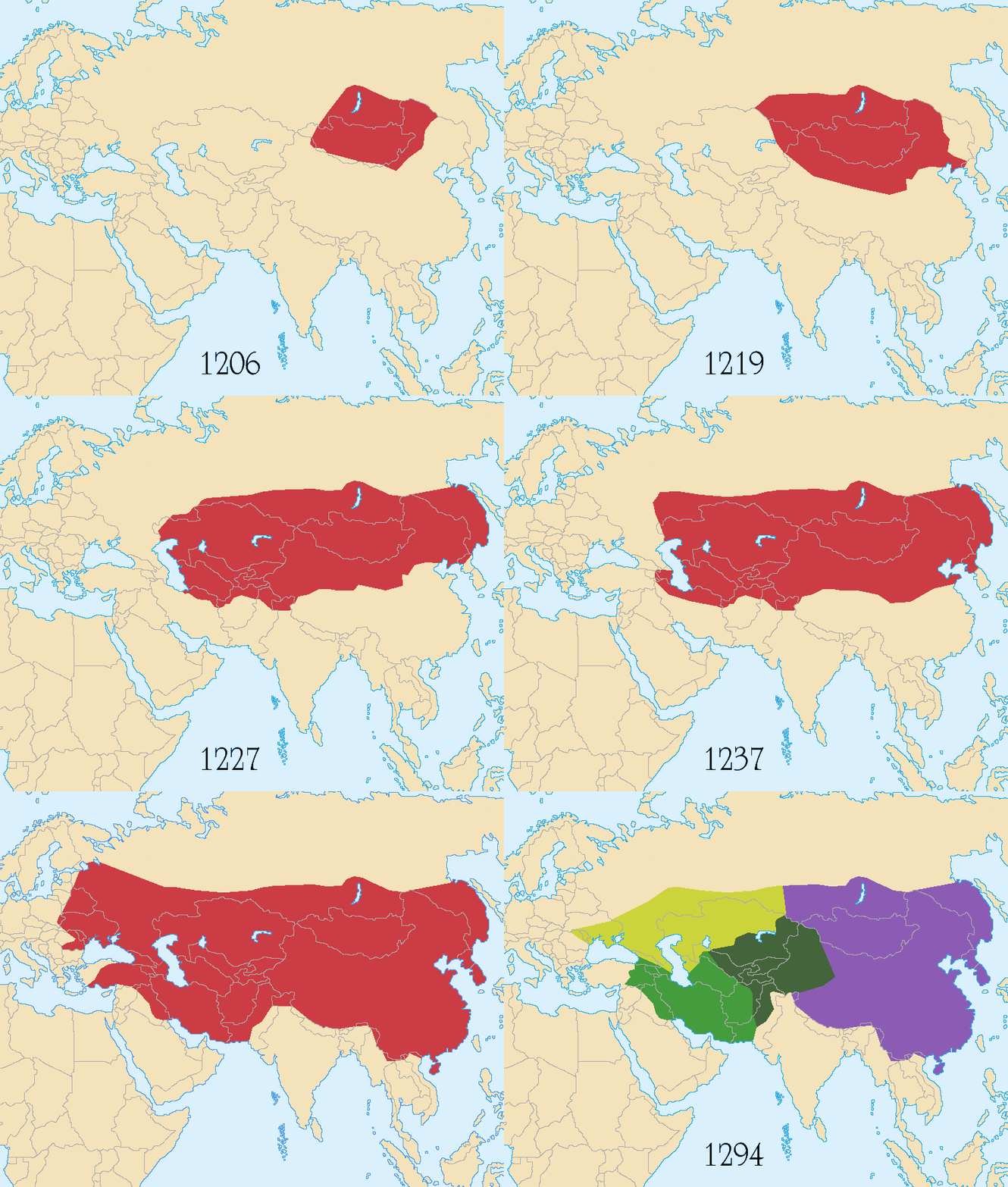
◊ The conquest of Baghdad and the death of the caliph in 1258 officiated the end of the Abbasid Caliphate and annexed its territories to the Mongol Empire, excluding Mamluk Egypt and the majority of Arabia. When the Khagan (or Great Khan) of the Mongol Empire, Möngke Khan, died in 1259, any further expansion by Hulegu was halted, as he had to return to the Mongol capital Karakorum for the election of a new khagan. His absence resulted in the first defeat of the Mongols (by the Mamluk Egyptians) during the Battle of Ain Jalut in 1260. Issues began to arise when the Mongols grew increasingly unable to reach a consensus as to whom to elect khagan. Additionally, societal clashing occurred between traditionalists who wished to retain their nomadic culture and Mongols moving towards sedentary agriculture. All of this led to the fragmentation of the empire in 1260. Hulegu carved out his Middle Eastern territory into the independent Ilkhanate, which included most of Armenia, Anatolia, Azerbaijan, Mesopotamia, and Iran.
The Mongols eventually retreated in 1335, but the chaos that ensued throughout the empire deposed the Seljuq Turks. In 1401, the region was further plagued by the Turko-Mongol, Timur, and his ferocious raids. By then, another group of Turks had arisen as well, the Ottomans. Based in Anatolia, by 1566 they would conquer the Iraq-Iran region, the Balkans, Greece, Byzantium, most of Egypt, most of north Africa, and parts of Arabia, unifying them under the Ottoman Empire. The rule of the Ottoman sultans marked the end of the Medieval (Postclassical) Era in the Middle East.