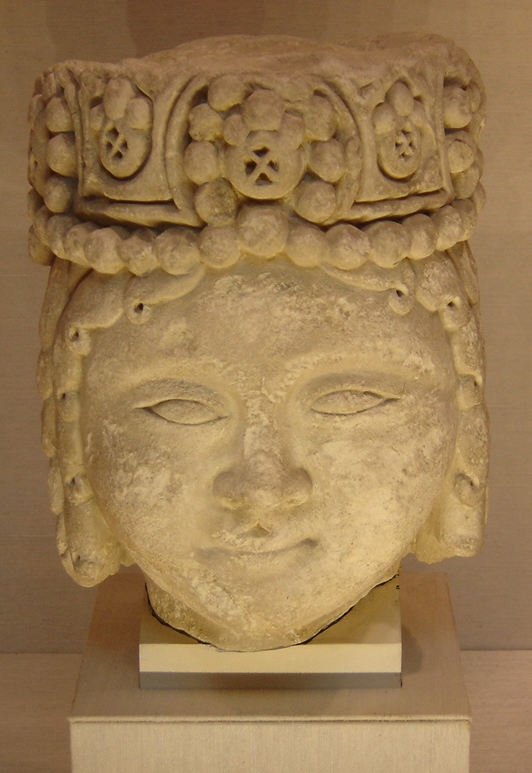
◊ The dominance of the Arabs came to a sudden end in the mid-11th century with the arrival of the Seljuq Turks, migrating south from the Turkic homelands in Central Asia. They conquered Persia, Iraq (capturing Baghdad in 1055), Syria, Palestine, and the Hejaz. Egypt held out under the Fatimid caliphs until 1169, when it too fell to the Turks.
Despite massive territorial losses in the 7th century, the Christian Byzantine Empire continued to be a potent military and economic force in the Mediterranean, preventing Arab expansion into much of Europe. The Seljuqs’ defeat of the Byzantine military in the Battle of Manzikert in the 11th century and settling in Anatolia effectively marked the end of Byzantine power. The Seljuks ruled most of the Middle East region for the next 200 years, but their empire soon broke up into a number of smaller sultanates.
Christian Western Europe staged a remarkable economic and demographic recovery in the 11th century since its nadir in the 7th century. The fragmentation of the Middle East allowed joined forces, mainly from England, France, and the emerging Holy Roman Empire, to enter the region. In 1095, Pope Urban II responded to pleas from the flagging Byzantine Empire and summoned the European aristocracy to recapture the Holy Land for Christianity. In 1099 the knights of the First Crusade captured Jerusalem and founded the Kingdom of Jerusalem, which survived until 1187, when Saladin retook the city. Smaller crusader fiefdoms survived until 1291.