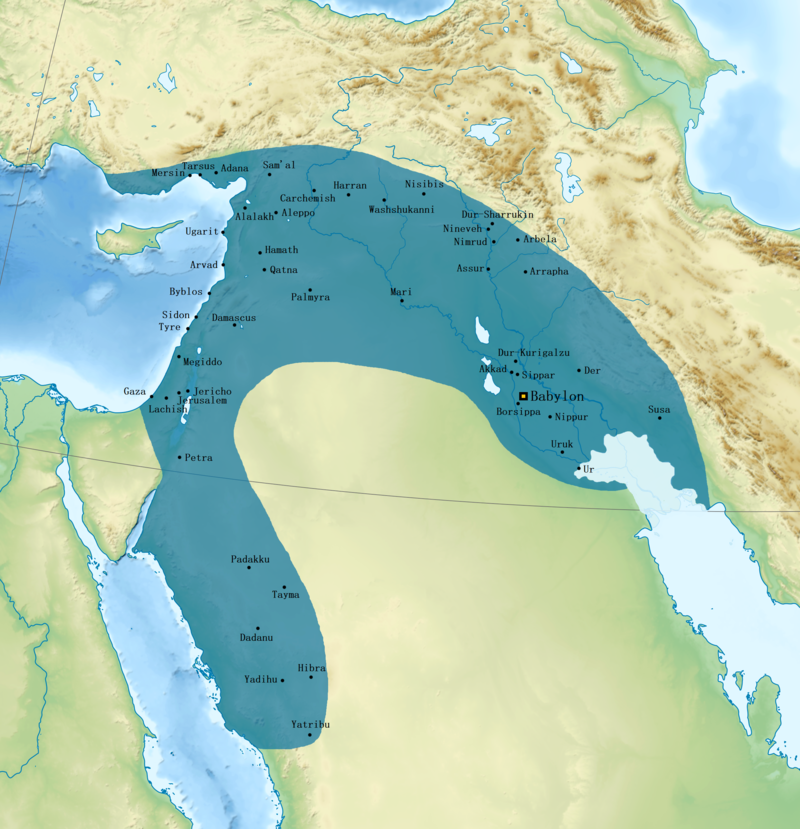
◊ From the early 6th century BC onwards, several Persian states dominated the region, beginning with the Medes and non-Persian Neo-Babylonian Empire, then their successor the Achaemenid Empire known as the first Persian Empire, conquered in the late 4th century BC by the very short-lived Macedonian Empire of Alexander the Great, and then successor kingdoms such as Ptolemaic Egypt and the Seleucid state in Western Asia.
After a century of hiatus, the idea of the Persian Empire was revived by the Parthians in the 3rd century BC—and continued by their successors, the Sassanids from the 3rd century AD. This empire dominated sizable parts of what is now the Asian part of the Middle East and continued to influence the rest of the Asiatic and African Middle East region, until the Arab Muslim conquest of Persia in the mid-7th century AD. Between the 1st century BC and the early 7th century AD, the region was completely dominated by the Romans and the Parthians and Sassanids on the other hand, which often culminated in various Roman-Persian Wars over the seven centuries. Eastern Rite, Church of the East Christianity took hold in Persian-ruled Mesopotamia, particularly in Assyria from the 1st century AD onwards, and the region became a center of a flourishing Syriac–Assyrian literary tradition.