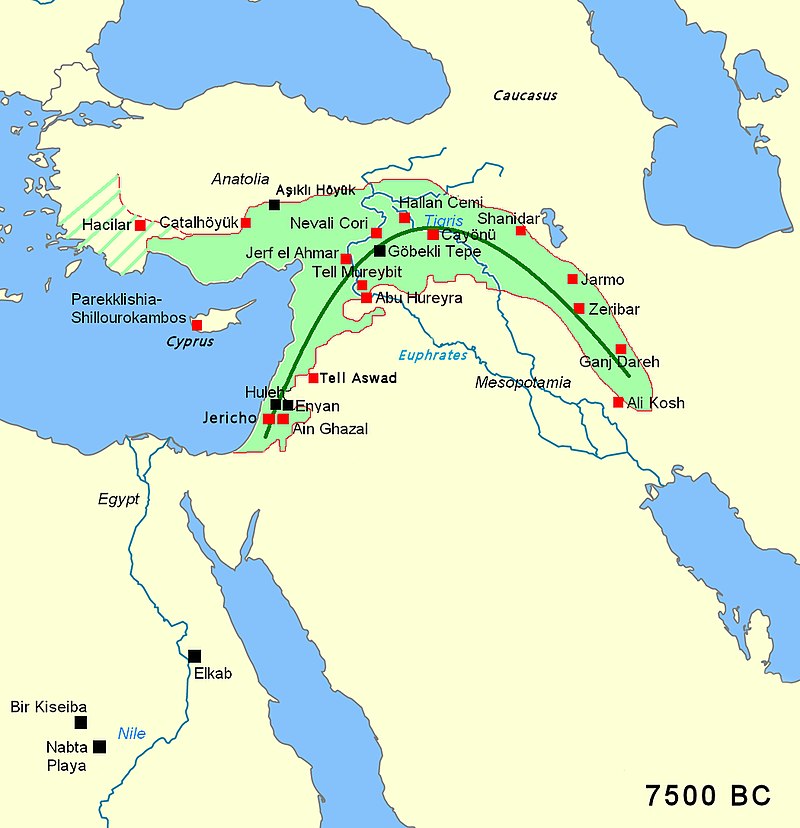
◊ Neolithic agriculturalists, who may have resided in Northeast Africa and the Near East, may have been the source population for lactase persistence variants, including –13910*T, and may have been subsequently supplanted by later migrations of peoples. The Sub-Saharan West African Fulani, the North African Tuareg, and European agriculturalists, who are descendants of these Neolithic agriculturalists, share the lactase persistence variant –13910*T. While shared by Fulani and Tuareg herders, compared to the Tuareg variant, the Fulani variant of –13910*T has undergone a longer period of haplotype differentiation. The Fulani lactase persistence variant –13910*T may have spread, along with cattle pastoralism, between 9686 BP and 7534 BP, possibly around 8500 BP; corroborating this timeframe for the Fulani, by at least 7500 BP, there is evidence of herders engaging in the act of milking in the Central Sahara.